For almost 150 years, St John Ambulance has been saving lives and supporting communities.
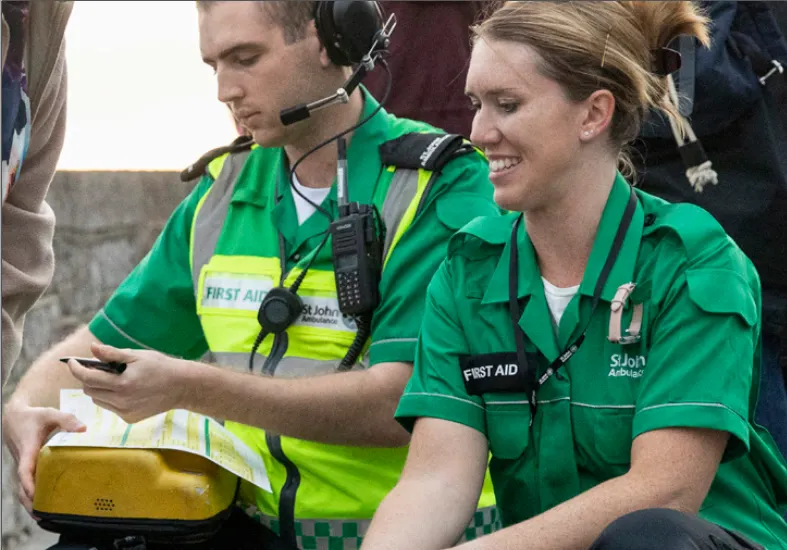
With roots stretching back over 900 years, when the Knights of St John set up the Knights Hospitaller and the first Hospital of St John in Jerusalem, St John Ambulance is a dynamic, volunteer-led charity supporting communities and the NHS with first aid and first responder cover.
Today, the organisation can count on 25,000 trained volunteers to provide first aid treatment, ambulance services, training and equipment to communities throughout England and is a familiar sight at events from country fairs and football stadiums to music festivals.
St John Ambulance operates from four Regions, each with District, Area and Unit-based operations to bring support directly to the heart of local communities. In addition to the volunteers, the organisation runs a fleet of over 500 vehicles ranging from cycle response units to fully equipped ambulances, patient transport vehicles, off-road vehicles, mobile treatment centres and Command & Control units.
Developing a radiocommunication system fit for the future.
Shenington Kart Racing Club hosts ten rounds of racing a year, featuring multiple classes of karts from Juniors (aged 8-13) to 250 Superkarts.
To ensure that volunteers can continue to provide the best possible service to communities across England, the Operations Communications team at St John Ambulance initiated a full review of its radiocommunication capability to develop a strategy that would deliver a more effective, user-friendly and resilient service to teams of volunteers operating in vehicles and on the ground. Dr Louis Clift, a St John volunteer and qualified engineer led the team on a journey to uncover the real needs of the organisation today and into the future and left no stones unturned in exploring the pros and cons of all available technologies.
The existing radiocommunication system has evolved over 25 years as funding has permitted without the benefit of a defined strategy or architecture. This has resulted in a patchwork of technologies and equipment being employed with resultant coverage and interoperability issues forcing the organisation to work around the limitations of the system rather that the system supporting vital operations.
“NEXEDGE NXDN brings proven performance in critical radio communications systems with functions and features matched to our strategy and requirements.”
To switch to DMR as the basis for our new system, would require the scrapping of our entire radio fleet at once, and we have a large fleet – over 500 mobile units in ambulances and support vehicles and 5,000 hand-portables, all spread across the country. Conversely, the NEXEDGE NXDN solution from KENWOOD aligned most closely with our list of requirements today and operational communications strategy to migrate in a phased way to a trunked digital system in the future, most notably:
-
True 6.25kHz narrowband giving us as much as 50% increased coverage over analogue which will reduce our trunking infrastructure costs in the future,
-
Site Roaming and improved fringe coverage allows our people to move between zones without needing to adjust their radios and gives communications officers the ability to tailor the system to a given situation,
-
Audit Log function in NEXEDGE NXDN Type-C trunking will give us the data to design new sites or upgrade fixed infrastructure,
-
Simple to use devices with user-friendly features like the selectable colour lightbar on handportables that lets the user know at-a-glance which talk group is in use,
-
Over-The-Air Programming (OTAP) which will save effort and downtime with batch programming and also provide an audit trace of software and firmware history for each device in the fleet,
-
A combination of Multiple Site Roaming and Linkable Talk Groups allows us to create a near instantaneous ‘pseudo-trunk’ system using a multicast system architecture and an advanced routing system to prepare our volunteers for what’s to come”.