Fire and Rescue Services
Increased efficiency, Faster Response & Enhanced Safety
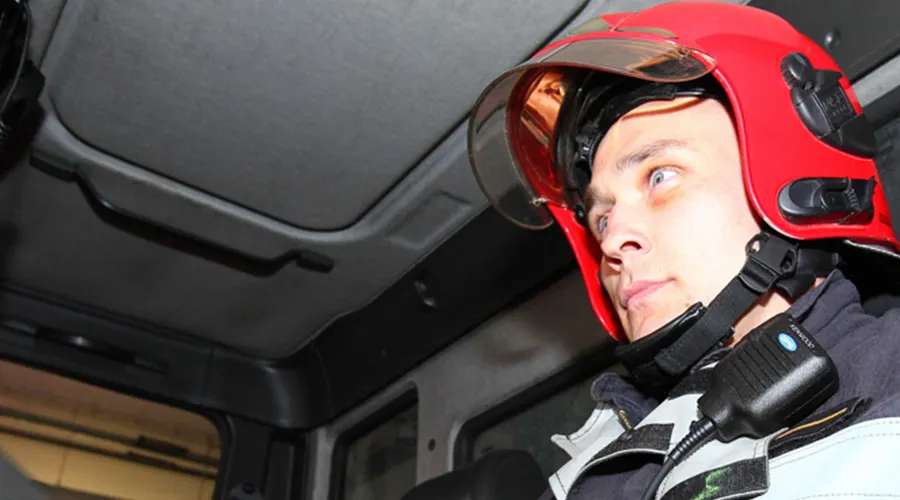
Two-way radios are used around the clock, 365 days a year, in some of the harshest, most physically demanding, and hazardous environments. They have been proven to reduce response times, support crew safety, and enable efficient fire service operations.
Responding to callouts often with scant information on what to expect, while SOPs establish the basis of operations, commanders and teams rely on clear communications upon arrival at the scene to risk assess the situation and formulate a strategy.
Radiocommunications reinforces SOPs in dynamic situations, qualifies visual observation, enables the coordination of activities between commanders and crews, facilitates status updates to the control centre, and provides essential information instantaneously to everyone involved in the operation.
Supporting Safer Operations
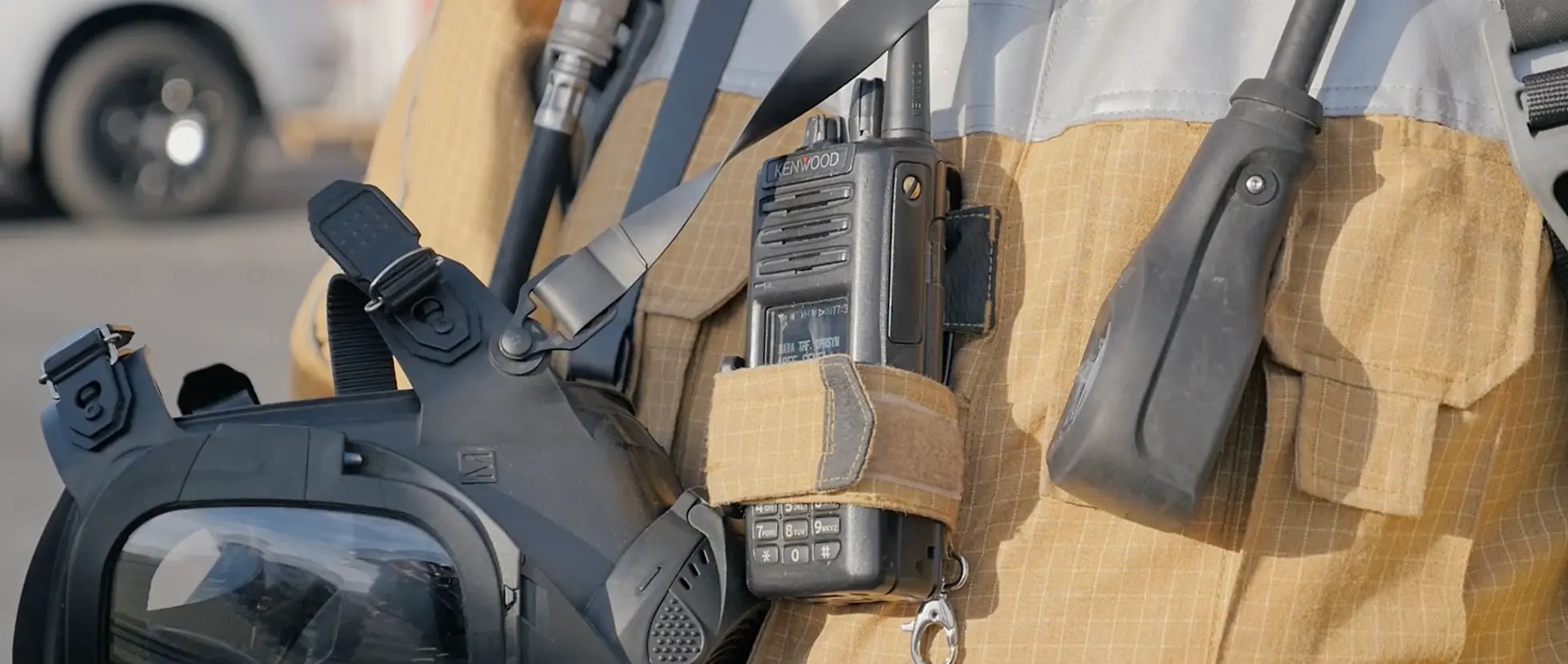
On arrival at an incident - which could be anything from a fire, flood, chemical spill, road traffic accident or man-made disaster - firefighters rightly expect a reliable and resilient radiocommunications between colleagues and commanders everywhere on the fireground, supported by equipment that is simple and easy to use even when wearing protective clothing and breathing apparatus.
Given the situations fire and rescue teams operate in, the radio devices need to be able to withstand extremes in temperature, be dust and water-resistant and provide durability in the event of being knocked and dropped.
Optional equipment typically in use by fire and rescue services includes remote speaker microphones, in-helmet headsets and, where required, intrinsically safe and ATEX IECEx radios, especially when entering the scene of a chemical spillage or in explosive atmospheres.
KENWOOD Systems Supporting Fire and Rescue Services
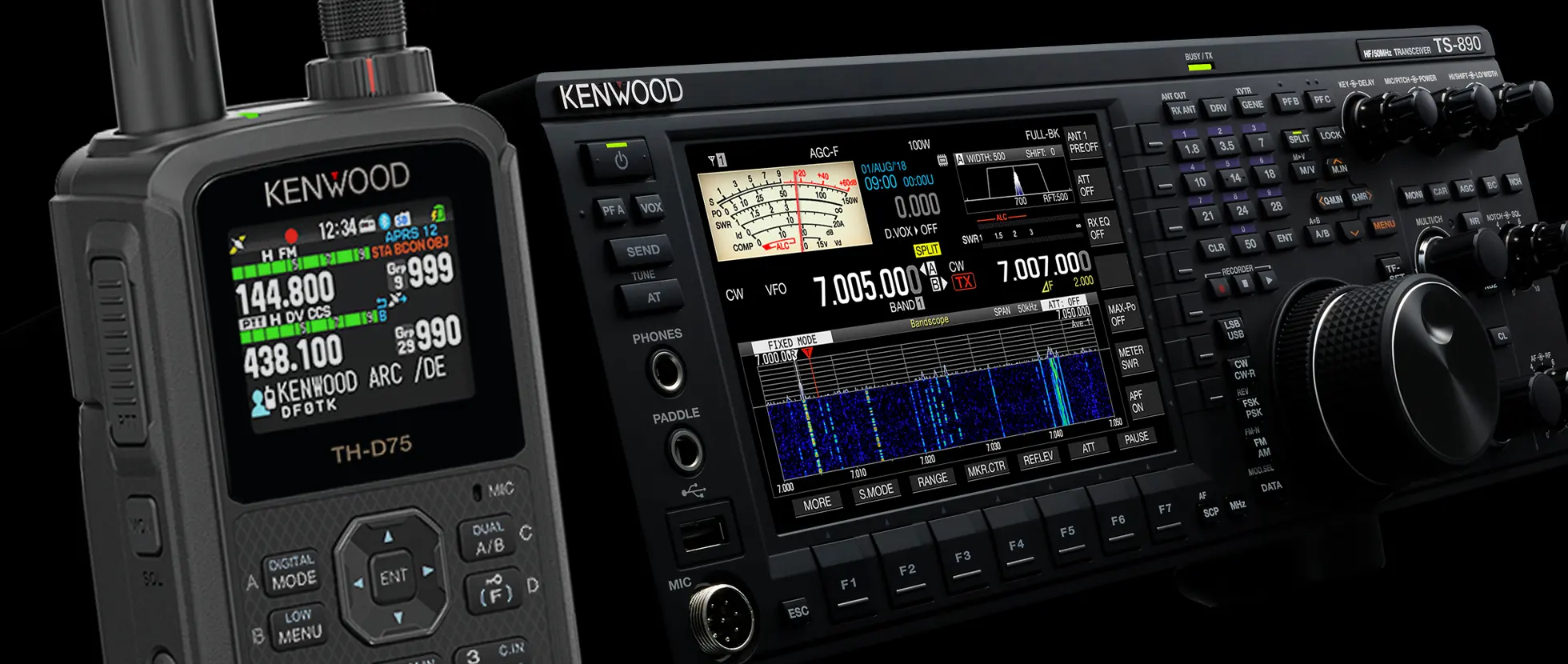
KENWOOD digital radio systems are widely used by fire and rescue services around the world with equipment installed both in NEXEDGE NXDN and DMR infrastructure covering wide areas and in mobile command and control units to provide clear voice and data transmissions to different teams to prioritise activities, respond to situations arising, manage emergency procedures and ultimately, to mitigate risks and maximise the efficient use of resources.
KENWOOD hand-portable and mobile in-vehicle devices are not only designed with the durability and ease of use demanded in highly pressurised working situations, but also to provide the best possible audio transmission and reception in noisy environments where a misheard or message corrupted by external noise could result in serious consequences. And as running out of charge during an incident is not an option, KENWOOD hand-portable radios can be equipped with extra capacity batteries to extend working time.
Proven Performance
Learn more about KENWOOD systems in use by Fire and Rescue services.
State Fire Service of Poland
Read more about the five major fire and rescue services responsible for an area of 65,530km2 and a population of over 1.5 million being served by the coverage, clarity and flexibility of NEXEDGE NXDN systems.
► Find out more
Istanbul Airport 64-channel, single-site trunked system
Watch the film about the NEXEDGE NXDN 64-channel, single-site Gen2 trunked system that provides coverage of the 76.5 km2 site of Istanbul Airport and serves the airport’s fire and rescue service and other key departments and functions.
► Watch Now
DMR & P25 system for Fire Department Bangor Maine
Read more about the KENWOOD system that allows the fire department in Bangor operate in DMR, P25 and analogue modes to offer flexibility to on-the-ground teams and seamless integration with other first responders.
► Find out more
Fighting a 1 in 100 Fire in Tennessee
The Eastern Tennessee fire in November 2016 was the largest fire in the region for over 100 years. Read more about how fire services, first responders and other public safety agencies utilised more than 1,200 KENWOOD NEXEDGE radios exclusively for their communications.
► Find out more
KENWOOD NEXEDGE NXDN / DMR Fire and Rescue Solutions
Despite the ubiquity of Push-To-Talk-over-Cellular (PoC) devices, two-way radiocommunication remains the optimal communication tool of first and last resort that continues to work in the field even during cellular and IP network overloads and service outages.
The ability of Commanders to coordinate and maximise the efficiency and safety of operations for crews located in different places, reliably, clearly, and instantly, is critical to risk management and successful outcomes.
This is especially important in rapidly changing situations, when assistance is required, or during the implementation of emergency and rapid evacuation procedures.
Solutions from KENWOOD range from highly flexible DMR and NEXEDGE NXDN voice and data-enabled digital conventional, IP networked and trunked communications systems to simulcast and multifrequency capabilities – the utility of which can be greatly extended with the addition of applications and software suites to include dispatch and location software, automated and event-triggered audio and text alerts and real-time asset tracking and monitoring.
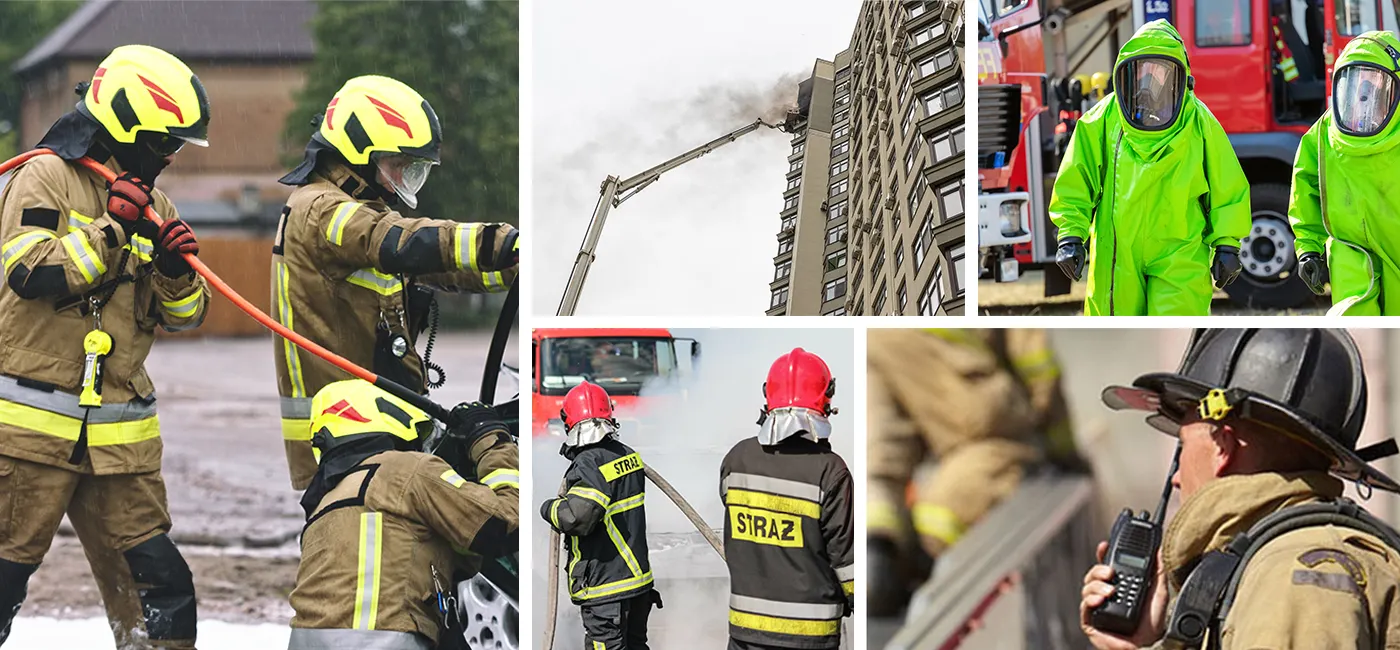
- Digital conventional, IP, Trunked and Simulcast systems
- Command and Control Centre dispatch
- Mobile C&C units
- Tracking of radios
- Fireground voice and data communications
- Support SOPs
- Data for post incident analysis
- Native analogue/digital Mode operation
- Built-in emergency functions
- Programmable man-down alerts
- Encryption against interception and eavesdropping
- Simple to programme and use
- Programmable voice and data alerts
- Over-the-Air Programming
- Individual, talk group and all radio programming
- In-vehicle and hand-portable devices
- Built-in and optional GPS models
- Easy-to-use radio devices even in protective gear
- ATEX certified models
- Rugged and durable MIL-STD 810, IP54/55/67 options
- Long battery life between charges
- Wide range of accessories
Radiocommunications System Considerations
Selecting a radio system for fire and rescue operations able to flex around dynamic and extreme situations brings unique challenges including:
Temperature: Firegrounds and rescue operations can be situated virtually anywhere, so the ability for radio equipment to operate in extremes of temperature is key. KENWOOD portable radio devices are designed and tested to operate in a temperature range between -30°C and +60°C.
Dust, Moisture, Vibration and Shock: Firefighting and rescue operations require equipment that can withstand dust, moisture and toxic exposure. KENWOOD portable radio devices are rated to IP54/55/67 and 68 and MIL-STD 810 C/D/E/F/G to provide protection against the ingress of dust, salt, grit and moisture and resistance to vibration and shock.
Fit for Purpose: It is a key requirement for fire and rescue operations to ensure that uninterrupted communication between commanders and teams is maintained at all times, and for the radio devices to be fit for purpose beyond IP and MIL-STD ratings, for example:
- Ease of use even when wearing gloves and safety equipment
- Providing audio clarity in noisy environments
- Incorporate built-in and optional advanced user safety features
- Compatibility with accessories to enable hands-free operation and hearing protection
- Long battery life between charges
Durability of mechanical buttons and switches. The Push-to-talk (PTT) button, for example, is the most used component of a portable two-way radio and needs to work flawlessly in extreme conditions. The PTT buttons on KENWOOD radios deployed in field tests achieved a measured PTT reliability in excess of 100 000 activations
Mean Time Between Failure (MTBF): MTBF measures the average time it takes for a component to fail. It is an effective indicator of a product's reliability and safety, and is typically measured in hours: the higher the MTBF value, the more reliable the product is. In field tests, KENWOOD radios have achieved MTBF values of up to 40,000 hours, making them ideal for use in situations where radios are essential to supporting safe, efficient operations.
Explosive Atmospheres: KENWOOD NEXEDGE NXDN digital ATEX / IECEx hand portable radios are available in VHF and UHF versions and certified for use in environments where hazardous, combustible gases and airborne particles are present. They incorporate a host of lone worker and advanced safety features and meet the following standards:
ATEX Directive 94/9/EC:
- II 2G Ex ib IIC T4 Gb - Gas Protection
- II 2D Ex ib IIIc T110°C Db - Dust Protection
- I M2 Ex ib I Mb - Firefighting Protection
IECEx Scheme:
- Ex ib IIC T4 Gb - Gas Protection
- Ex ib IIIC T110°C Db - Dust Protection
- Ex ib I Mb - Firefighting Protection
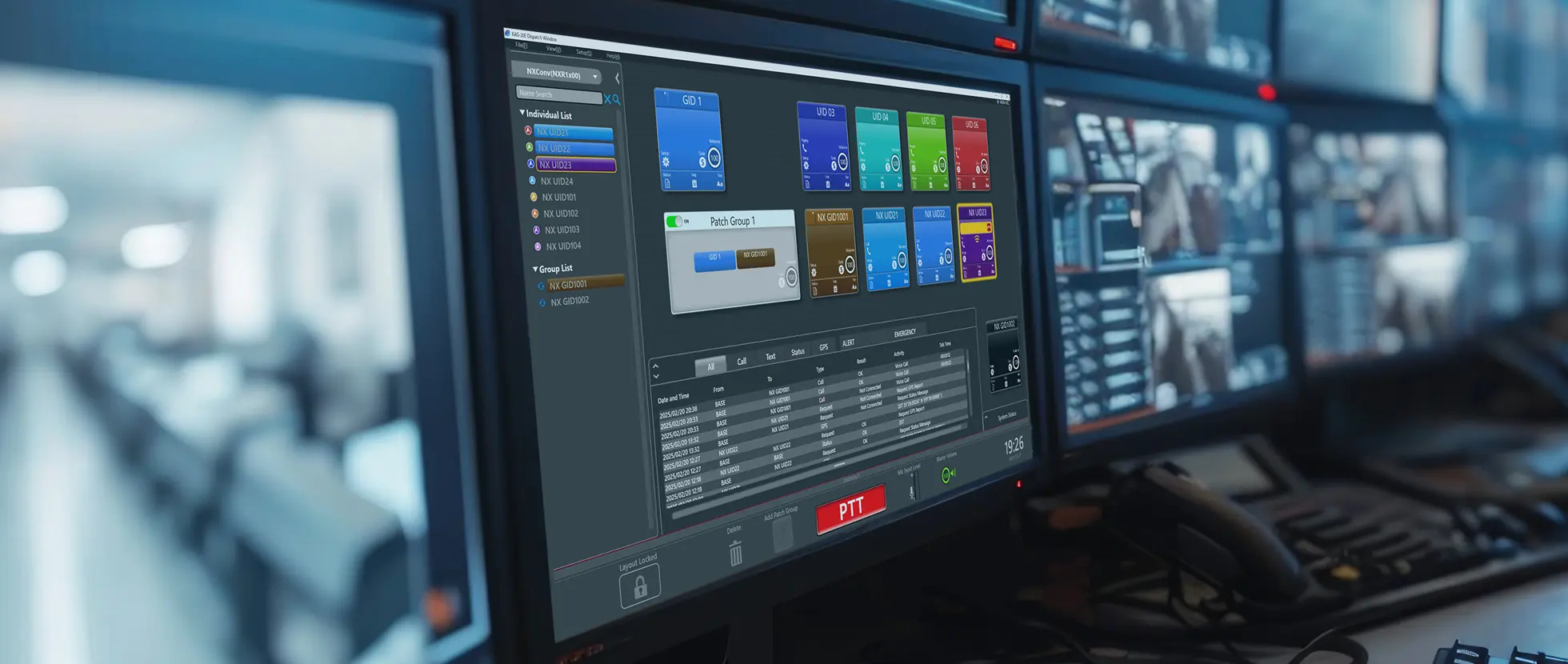
Location Services: KENWOOD DMR and NEXEDGE NXDN radiocommunication systems managed with KAS-10 and KAS-20 AVL & Dispatch Software suites help fire and rescue services to implement robust safety protocols and achieve greater efficiencies by pinpointing the location of staff and vehicles above and below ground in real time.
Mixed Digital-Analogue Operation: KENWOOD DMR and NEXEDGE NXDN digital two-way radio devices are ideally suited to those firefighting operations upgrading from analogue to digital communications, as all devices feature native analogue/digital mixed operation. This allows devices to communicate automatically with existing analogue radios to provide a predictable and cost-efficient path to full digital implementation.
System flexibility: KENWOOD DMR and NEXEDGE NXDN radiocommunication systems can be configured in conventional, IP, trunked, simulcast and multi-frequency formats.
Advanced Health & Safety and Lone Work Protection
Individual firefighters and rescue workers can have their radios programmed and monitored so that they will be called automatically at predetermined times to check on their status and should there be no response, an alarm will be raised. Similarly, a programmable function key on the radio can be assigned to trigger an emergency alert which is transmitted immediately to all other radio users.
All NEXEDGE NXDN and DMR digital two-way radio devices feature an Emergency Key and Emergency Call features as standard, while more advanced models additionally offer built-in or optional GPS modules, Lone Worker, Motion Detection and compatibility with Location Services, which can be programmed to deliver automated proximity triggered prompts – for example when site workers enter a hazardous area where special safety clothing is required or for specific functions such as tower crane and other machinery operators – making them essential in a robust health and safety policy.
These advanced safety features offer an added layer of worker protection in support of emergency and first aid protocols with the ability to automatically send alerts and alarms to the command centre and/or other radio users:
Priority Call: The Priority Call feature ensures the availability of a radio channel in the event of an emergency and allows a dispatcher to interrupt all existing calls on a channel.
Emergency Key: An alarm is triggered along with the user ID of the sender when the Emergency Key button is pressed. GPS-equipped radios can additionally send the location (GPS coordinates) of the user.
Lone Worker: An alarm is triggered along with the sender's user ID if a user does not respond to a status prompt within a specified time.
Man Down: An alarm is triggered along with the user ID of the sender if the radio is tilted beyond a pre-determined angle, indicating that the user may have fallen or become incapacitated. Other programmable features include:
- Stationary Detection: Emergency mode is triggered along with the user ID of the sender when the radio remains in a stationary position for a period exceeding a pre-set time, indicating that the user is unable to operate the transceiver, or it has been lost, mislaid, etc. GPS-equipped radios can additionally send the location (GPS coordinates) of the user to the site office using software such as KAS-10 and KAS-20 AVL and Dispatch suites.
- Motion Detection: Emergency mode is triggered along with the user ID of the sender when the radio is vigorously shaken or swung for a period exceeding a pre-set time, indicating that the user is running to or from an incident. GPS-equipped radios can additionally send the location (GPS coordinates) of the user to the site office using software such as KAS-20E AVL and Dispatch suite.
Location Services: NEXEDGE NXDN and DMR radios equipped with GPS can additionally be programmed to send location information to the site office using software such as KAS-20E AVL and Dispatch suite, so that the user at risk can be located quickly and response times can be reduced.
Remote Monitor: Allows dispatchers to listen in to a radio through its microphone in situations where an alarm is activated, and the radio user is unable to respond. This provides incident commanders with the intelligence to assess an evolving situation in real time and to quickly initiate an appropriate response.
Intrinsically Safe Radios: NEXEDGE NXDN ATEX/IECEx certified radios provide the solution for officers and workers operating in explosive atmospheres or situations where hazardous airborne particles are present.
Location Services
In the drive to improve safety and operations efficiency, fire and rescue services are increasingly looking to their radiocommunications systems to not only provide failsafe voice and data capability, but also to support the implementation of automation, provide mobility and traceability, and the data and metrics to review responses and outcomes.
KAS-20E AVL/Dispatch Suite
A KENWOOD DMR and NEXEDGE NXDN KENWOOD DMR or NEXEDGE NXDN system equipped with GPS devices can not only provide multiple communications channels and talk groups but also, with the addition of the optional KAS-20E software, allows you to monitor and track every radio so you can pinpoint the location of all users in real-time and deploy resources as required quickly.
Exceptional Audio Quality Even in Noisy Environments
Fire and rescue operations are often noisy with equipment and machinery in constant use. KENWOOD radiocommunication devices benefit from JVCKENWOOD Group’s 60-years’ experience in producing consumer audio and visual equipment (Trio, KENWOOD and JVC), and is renowned for exceptional sound quality.
This transfer of knowledge and experience has led to the development of a number of novel and innovative solutions which overcome the problem of cancelling ambient noise effectively while improving the audio clarity of the transmitted voice in any operating environment.
Ultimate Noise Cancellation: NX-5000 Series hand-portable radios achieve optimum noise cancellation with the use of two integrated microphones. The main microphone is situated closer to the desired source (front of the radio), while a second microphone in the rear of the radio receives the ambient noise. In a noisy environment, both microphones receive noise at a similar level, however, the main microphone receives the user’s voice more strongly. The processor in the radio subtracts one noise source from the other so that most of the ambient noise is cancelled which effectively enhances the quality of the transmitted audio of the user’s voice.
Active Noise Reduction: Both NX-5000 and NX-3000 Series radios feature Active Noise Reduction (ANR). ANR serves to cancel the noise component of the collected audio to improve the transmitted audio quality.
Noise cancellation functions can be ‘Custom’ configured to adjust the vocoder, DSP, filters, specific noises etc. to suit the operating environment.
Selectable Audio Profiles: The received audio will sound different depending on the usage environment of the radio, characteristics of the device (such as the microphone to be combined with the radio and external devices), and the tone of voice and manner of speaking of the speaker. The received audio will also sound different depending on the output method, such as using the speaker of the radio or via an earphone, to hear the received audio. KENWOOD radios feature 6 customisable audio profiles which can be configured for specific scenarios and selected by the user to suit the operating environment.
Security & Privacy
As more products are connected by IP and to networked information and automation systems, there is a growing risk of leakage and theft of personal and other information, fabrication or destruction of data, and hijacking of products.
As one of the world’s leading manufacturers of radiocommunication products and solutions, we take our responsibility for ensuring the security integrity of our products and the data we hold on systems developed on behalf of our customers. Click for more information on JVCKENWOOD’s Group Privacy Policy.
Product Security
Secure encryption is essential in radiocommunications to provide security against eavesdropping, jamming and other malicious attacks on a radio system.
All KENWOOD digital radio devices are equipped with a voice scrambler feature as standard, while licenced NEXEDGE NXDN and DMR radios are further protected with more advanced encryption:
ProTalk PMR446: Voice inversion scrambler.
NX-1000 Series: Built-in digital scrambler as a standard, optional upgrade to ARC4 Encryption for DMR.
NX-3000 Series: Built-in digital scrambler as standard, optional 56-bit DES encryption and upgrade to 256-bit AES (NEXEDGE NXDN and DMR) and 40-bit ARC4 encryption for DMR.
NX-5000 Series: Built-in digital scrambler and DES-56 bit (4 keys) as standard, optional hardware upgrade to 56-bit DES and Support to 256-bit AES (NEXEDGE NXDN and DMR) and 40-bit ARC4 encryption for DMR).
Information Security
The Communications Systems Business, Professional Systems Business and the Healthcare Business units of JVCKENWOOD Corporation are certified to ISO/IEC 27001:2013 international standards for information security management system and JIS Q 27001:2014 Japanese industrial standards, both of which specify standards for information security management systems and establish requirements and implementation of the framework to protect information assets.
Built Tough to Windstand Rain, Dirt and the Rough and Tumble of Fire and Rescue Operations
As you would expect, all KENWOOD professional hand portable walkie talkies and mobile radios conform to MIL-STD-810 C/D/E/F/G for ruggedness and durability and are IP54/55/67 Water & Dust Intrusion rated, making them suited for use in any environment.
In addition, KENWOOD can offer ATEX IECEx devices for use in hazardous, explosive atmospheres.
Explore KENWOOD’s Flexible and Future-Proof Communications Solutions
To discover more about the millions of KENWOOD devices in use by countless customers in hundreds of applications around the world, including the innovative, multi-protocol NX-5000 Series (NXDN, DMR, P25 and FM Analogue), NX-3000 Series (NXDN, DMR and FM Analogue) and exceptional value offered by the entry-level NX-1000 Series hand portable walkie-talkies and mobiles, please click on the banners below.
For more information on KENWOOD digital system solutions, including DMR Tier 3 trunking and Simulcast, NXDN Type-C, Type-D and Gen2 trunking, click here.
License-Free PMR446
License-free Digital & Analogue PMR446 is ideal for applications where instant one-to-one or group communications are required over short distances, indoors & out.
NX-1000 Series
Feature-rich, entry-level hand-portable and mobile radios available in Digital DMR, NEXEDGE Digital NXDN and Analogue versions.
NX-3000 Series
Mid-tier hand-portable and mobile radios with GPS and keypad options, in switchable DMR plus FM Analogue or, NEXEDGE NXDN plus FM Analogue configurations.
ATEX / IECEX Safety Radios
NXDN ATEX hand portable radios are designed for users requiring ATEX devices and incorporate a host of advanced safety features.
System Solutions
Extend the flexibility, scalability and performance of a KENWOOD DMR or NEXEDGE NXDN system with single-site & wide area trunked capabilities.
Software Suite
Empower your KENWOOD DMR or NEXEDGE NXDN Digital operations with cost-effective and simple to implement KASC-20E AVL / Dispatch software suite.